Archive for the ‘Panasonic’ Category

Panasonic Lumix GF1: micro gear, great photographic power!

Sunday, January 24th, 2010

The Panasonic Lumix DMC-GF1 is the lastest member of the Micro Four Thirds family. But before Micro Four Thirds, there was Four Thirds. With Olympus having produced relatively small film SLRs since at least the early 1970s, it was probably no surprise that they would partner with Kodak to introduce the Four Thirds System standard (with its sub APS-C sized sensor) as they prepared to move into the digital age. The smaller sensor helped the company produce diminutive DSLRs that carried on the Olympus tradition.

Sensor resolution is 12.1 megapixels and there are full manual and auto controls, plus a palette of user-established settings that rival DSLRs in number and scope. You can shoot in RAW if you choose, or RAW/JPEG combinations, and there’s 1280×720 HD video in AVCHD Lite (which is more memory efficient than Motion JPEG) or Motion JPEG formats.

The GF1 is undoubtedly smaller than its big brothers, the G1 and GH1, but it’s not quite as tiny as Panasonic might lead you to believe. Measuring 119 x 71 x 36.3mm and weighing 285g without a lens attached, it’s just a little smaller and 50g lighter than the very similar Olympus E-P1 camera. Instead of a traditional DSLR hand-grip, the DMC-GF1 has a slightly raised vertical area on the front-right which isn’t big or pronounced enough to be of much assistance. The rubberized thumb-rest on the rear is a lot more useful.

Because of space considerations inherent in the Micro Four Thirds System, a 3.0 inch LCD monitor operating in Live View is the only means of image composition and framing for capture.

If you don’t want to use the LCD screen for composition, an optional electronic external viewfinder is also available, the Panasonic DMW-LVF1 (priced at $199.95), which slots into the external flash hotshoe on top of the camera. The GF1 can record 1280 x 720 high-definition video in the AVCHD Lite or Motion JPEG formats, and it can focus in just 0.3 seconds via its contrast auto-focusing system.

The camera uses SD/SDHC memory media, and Panasonic includes a battery charger/AC adapter, battery pack, body cap, AV cable, USB connection cable, AC cable, DC cable, shoulder strap and CD-ROM software with each camera.

The Panasonic Lumix DMC-GF1 is available in four colours, black, red, silver and white, either body only (£570) or in two different kits, one with the new LUMIX G 20mm/F1.7 ASPH pancake lens, and the other with the existing 14-45mm/F3.5-5.6 ASPH/MEGA O.I.S. zoom lens: starting from US $ 866,95!

Panasonic GF1: a serious competitor for Olympus E-P1 micro four-thirds compact camera

Saturday, September 5th, 2009

The Panasonic Lumix DMC-GF1 is a 12.1-megapixel Micro Four Thirds camera, which offers a more compact form factor than its predecessors, the G1 and GH1. The Lumix GF1 looks more like the Olympus E-P1; however the GF1 also offers a pop-up flash, a feature that I sorely missed on the Olympus E-P1.

The Panasonic Lumix DMC-GF1’s Venus Engine HD records stunning high-resolution 12-megapixel images using its advanced Live MOS Sensor. This sophisticated LSI circuit separates chromatic noise from luminance noise and applies the optimal noise reduction to each, helping to capture clear and beautiful images even when shooting at high ISO levels.

The Panasonic Lumix DMC-GF1 also comes fully-equipped with a built-in flash and a large, 3.0-inch Intelligent LCD with a wide viewing angle and a 460,000-dot resolution. The Intelligent LCD offers automatic backlight control, which when combined with its high-resolution, helps improve visibility in all light environments – from sunny outdoors to low-light interior settings.

New for the LUMIX G Series, the Panasonic Lumix DMC-GF1 is compatible with an optional Live View Finder (DMW-LVF1), which provides the full-time live view function boasting 100% field of view regardless of the attached lens. To further expand the LUMIX G Series system, Panasonic Micro Four Thirds digital cameras can be used with Four Thirds System interchangeable lenses via an optional mount adaptor DMW-MA1 and with the prestigious Leica M/R lenses using Panasonic’s DMW-MA2M DMW-MA3R. These adapters give the user access to the unlimited number of lens properties.

The Panasonic Lumix DMC-GF1 will be available in early October 2009 with the option of two kits – both with a suggested retail price (SRP) of $899.95. One kit option includes the newly-announced LUMIX G 20mm/F1.7 ASPH, a compact and lightweight “pancake” lens, while the other kit features the LUMIX G VARIO 14-45mm/F3.5-5.6 ASPH/MEGA O.I.S. The optional Live View Finder DMW-LVF1 has an SRP of $199.95; while the DMW-MA2M and DMW-MA3R both have an SRP of $249.95. All new accessories will also be available in early October.

Panasonic releases ‘two of the world’s lightest HD camcorders’

Wednesday, July 8th, 2009

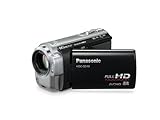
At just 0.5 lbs each, Panasonic’s two new high definition (HD) camcorders are almost half the weight of the company’s first AVCHD offering released in 2006 which tipped the scales at just under a pound. While a pound may not sound like much anyway, any weight loss in a device that may need to be carried at eye level for extended periods of time is good news for tired arms everywhere.

The only difference between the two new models is the choice of recording media. The Panasonic HDC-SD10K records to an SDHC/SD Memory Card, while the Twin Memory Type HDC-TM10 records onto both an 8GB built-in Memory and an SDHC/SD Memory Card. The Twin Memory of the HDC-TM10 also allows for a Relay Recording function, which automatically switches the recording media to the SDHC/SD Memory Card when the built-in memory is full.

As is the way of technological advances, the new cameras haven’t needed to cut features to shed the weight. Both camcorders feature 16x optical zoom supported by an Advanced Optical Image Stabilizer (O.I.S.) function to minimize hand-shake while zooming. The new Active mode also extends the hand-shake correction range to allow the shooting of clear, crisp images while walking or moving.

Other features include Face Detection, which adjusts the exposure based on the faces being captured, Intelligent Contrast Control, which helps ensure proper contrast, and Intelligent Scene Selector, which determines the shooting conditions and automatically selects the Scene setting that will provide optimal results. Additionally AF/AE Tracking automatically tracks the focus and exposure of a moving subject for consistent images.

To allow for operation without looking away from the subject the cameras include a touch screen that can be used to operate a variety of functions by simply touching an icon on the screen. Both models also include a built-in video light and flash for low light filming.

Anyone who has ever operated a camcorder knows that just missing a great shot is the height of frustration so the Panasonic HDC-SD10K and HDC-TM10 seek to minimize this with a 1.9 second power on time and Pre-Rec function, which continuously records three seconds of images into an internal buffer memory. When the Record button is actually pressed, the three seconds immediately prior are added to the beginning of the clip.

The HDC-SD10K will be available in black for USD$549.95, while the HDC-TM10 will be released on August 10, 2009 in both black and silver for USD$ 599.95.

A waterproof- and flash memory-based Camcorder from Panasonic: the SDR-SW20, get ready for summer video shooting!

Sunday, May 31st, 2009

The Panasonic SDR-SW20 Waterproof Camcorder with 10x Optical Zoom combines a rugged, compact body with waterproofing that allows use in water, including seawater, to a depth of five feet, shock-proofing that protects against drops from up to 4 feet, and a dust-proofing design that shuts out airborne dust particles that can lead to malfunction. With a design that protects it from water, dust, and impact, the SW20 is a versatile camcorder that can meet varying weather conditions and shooting environments.

For ease of shooting, the Panasonic SDR-SW20 Camcorder features 10x optical zoom, a 2.7-inch LCD screen and a new design for easy and comfortable shooting. It also has a grip designed so the user can stabilize the unit by bracing the elbow against the body as with conventional camcorders. In addition, a Sub Rec button on the front of the camera, makes it possible to shoot with a pistol-grip style.

The Panasonic SDR-SW20 records to SD or SDHC memory cards, which further contributes to its compact design and also provides extended recording capability. A 16GB SDHC memory card allows up to approximately 13 hours, 20 minutes of recording.

This model offers the High-Picture-Quality Wide Mode, which produces images that make for beautiful, dramatic viewing on a wide-screen TV. The image is processed on 16:9 area of the CCD. Because the image decoded has the same proportions as your wide-screen TV, there is virtually no picture quality degradation. You get beautiful images and all the excitement and dynamism on either a wide 16:9 screen TV or a conventional 4:3 TV. This model also features a wide 2.7-inch LCD, making it easier to frame shots when you’re shooting in 16:9 mode. You can enjoy shooting wide, and viewing wide.

Built with ease of operation in mind, the Panasonic SDR-SW20 Waterproof Camcorder features truly friendly video Editing and Networking.

Choices are multiple, if you have an MPEG2-compatible DIGA DVD recorder with an internal hard disk and SDHC/SD memory card slot, saving your images on the hard disk is as easy as inserting an SDHC/SD memory card into the slot. This saves space you’d otherwise need for storing the recording media, and makes playback easier. And once the data is on the hard disk, it’s easy to copy it to a DVD disc.

About easy DVD copying, simply connect the SW20 directly to a DVD burner via a USB cable. You can then copy recordings from the SDHC/SD Memory Card to a DVD disc with easy operation.
The disc you make can be played on DVD players, so playback is easy too.

The Panasonic SDR-SW20 includes Editing Software and USB 2.0.
USB 2.0 compatibility lets you upload a motion picture data to a PC at high speed over a single USB cable.

You never have to finalize an SDHC or SD Memory Card, so you can transfer data to a PC right after you shoot. Just slip the card into the slot on the PC, and you’re ready to upload and edit. The camera comes with MotionSD STUDIO software that lets you add music and words during editing or copy your recordings onto a DVD disc.

It’s now available for US $ 229.99 (and that’s a summer cool 42% off list price!)

Panasonic Lumix DMC-ZS3 10MP Digital Camera with 12x Wide Angle MEGA Optical Image Stabilized Zoom and 3 inch LCD

Sunday, May 17th, 2009

The new Panasonic Lumix DMC-ZS3 features 10.1-megapixels, a 25mm ultra-wide-angle lens and 12x optical zoom, meaning it has added 2x optical zoom to the award-winning TZ-series camera, yet reduced its size. The Panasonic Lumix DMC-ZS3 also features a Leica DC Vario-Elmar lens and High Definition (HD) video recording ability, known as AVCHD Lite.

It’s not often that we see a whole new video format being introduced on a digital camera, but that’s what Panasonic has done with the Panasonic Lumix DMC-ZS3; as well as being a well specified 10-megapixel still camera, it’s the first digital camera to shoot high definition video in the new AVCHD Lite format.
Camcorder fans may recognize the first part of the name (AVCHD is the format that many high def camcorders shoot in), but the Lite part is new.
AVCHD lite is a subset of the full AVCHD standard, which means that the ZS3 shoots 720p video (which is lower in resolution than the 1080i that most dedicated camcorders shoot) that can be watched on a HDTV and edited in many video editing programs, such as Apple’s iMovie.

In fact the Panasonic Lumix DMC-ZS3 is the world’s first digital camera to feature HD video recording in “AVCHD Lite”.
Compared with the conventional Motion JPEG format, AVCHD Lite allows longer recordings with breathtaking HD visual and audio quality.
This combined with a well-considered control interface, which includes a dedicated movie recording button on the camera’s back panel, makes the ZS3 a hybrid model that performs admirably for both still and motion image capture.

The Panasonic Lumix DMC-ZS3 packs a LEICA DC VARIO-ELMAR lens with 12x optical zoom into a compact body.

The Panasonic Lumix DMC-ZS3 also expands Panasonic’s popular Intelligent Auto (iA) mode with the addition of Face Recognition–a feature that “remembers” faces from previous shots. When a registered face appears in the frame, the camera will prioritize focus and exposure to capture it beautifully. With Face Recognition, when a familiar face is recorded several times, the camera will prompt the users to register the face. Once registered, if the face appears into the frame again, the camera will display the name specified for that person and prioritize focus and exposure so that the registered face is bright and sharply focused.

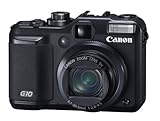
Panasonic LX3, Canon Powershot G10 and Nikon P6000: a trio of powerful compact cameras!

Tuesday, December 23rd, 2008

Compact cameras usually sacrifice usability, features for design’s sake, to reduce weight, to be simpler.
Here’s a trio of digital cameras that may well be the perfect choice for all amateur photographers, as well as being the second best friends to photo-pros.
The sport features, accessories compatibility and megapixel count usually found in higher - DSLR cameras, so don’t judge them by from their category: they’re compact cameras on steroids!

Meet the Canon Powershot G10 14.7MP Digital Camera with 5x Wide Angle Optical Image Stabilized Zoom.


The third-generation Canon Powershot G10 is a stunning successor, loaded with uncompromising specs like 14.7 megapixels, a 28mm wide-angle lens, and Canon’s new DIGIC 4 Image Processor for notably improved face and motion detection. This is a camera that supports and nurtures creativity, with a full range of shooting and recording modes and compatibility with exciting accessories including Speedlite flashes.

Full range of shooting and recording modes including RAW + JPEG
The Canon Powershot G10’s RAW mode lets you shoot images without JPEG compression. It gives you clearer images and complete creative control in editing. RAW images are transferred directly to the computer where they can then be edited using image adjustment software or a processing application to adjust your images as you please. The camera can also be set to allow the simultaneous recording of both RAW and JPEG images while shooting.

Also, with 26 Shooting Modes including 17 Special Scene Modes, you’re ready for whatever shot comes your way.

The Canon Powershot G10 gives you an extra-large 3.0-inch LCD screen for excellent control when framing your shots. But size is only part of the story. Canon’s PureColor LCD II offers more spectacular color, resolution and contrast even at an angle (compared to PureColor LCD). The screen is highly durable and easy to see in any light with a scratch-resistant, anti-reflective coating. It is a perfect feature for gathering friends and family around to see your images.

The PowerShot G10 is compatible with the Speedlite EX series that is for all EOS series SLR cameras. Attach a Speedlite 580EX II to the hot shoe, then you can set and control the flash on the “Flash Control” menu in the camera. With the 580EX II, the G10 is given extra functions such as autoflash metering, FE lock and Flash exposure compensation; continuous shooting with external flash. Also Canon’s Speedlite Transmitter ST-E2 enables you to have multiple slave flashes and wireless control. A Tele Coverter lens designed for the G10 and High-Power Flash designed for all PowerShot cameras are also available.

Panasonic DMC-LX3K 10.1MP Digital Camera with 2.5x Wide Angle MEGA Optical Image Stabilized Zoom (Black) and with Leica lens.


Designed for easy, creative shooting, and high-performance in low-light conditions, the Panasonic DMC-LX3K features a F2.0 24mm Leica DC Vario-Summicron lens, 10.1 megapixels and an ultra-sensitive 1/1.63-inch CCD developed specifically for this model. By combining a high-quality lens and sensor ready for a variety of shooting conditions with a wide-range of accessories and manual controls, the DMC-LX3 is ideal for professional photographers and serious amateurs looking for a compact digital camera that furthers their creative photography.

At the heart of the Panasonic DMC-LX3K, is its 1/1.63-inch CCD. Making the intentional choice to limit the number of megapixels to 10.1 on its CCD, Panasonic was able to give more space for each pixel and also redesigned the peripheral circuits and other components to further minimize noise generation. As a result, sensitivity is almost 40 percent higher and saturation is increased by 35 percent when compared to Panasonic’s 10 MP digital cameras, giving the Panasonic DMC-LX3K outstanding image quality and a wide dynamic range, and meeting the demand for a camera that works optimally in low-light environments. The CCD is also capable of reproducing images in three aspect ratios — 4:3, 3:2 or 16:9. The new Multi Aspect mode allows the camera to take an image in all three aspect ratios simultaneously, allowing users to choose the version that best suits their needs.

Another major upgrade to the LX3 is the F2.0 24mm ultra wide-angle Leica DC Vario-Summicron lens. The F2.0 is about twice as bright as a F2.8 lens and can shoot at higher shutter speeds to capture clear, blur-free images in dimly lit environments. In addition, the 24mm lens captures approximately a 213-percent larger viewing angle than a normal 35mm camera and 136% larger compared to a 28mm wide-angle lens. The lens unit consists of eight elements in six groups with four aspherical lenses with four aspherical surfaces. As a result of the F2.0 lens, the LX3 produces high resolution and minimal distortion and artifacts — such as chromatic aberrations, ghosting and flaring.

The DMC-LX3 has the ability to record High Definition (HD) video in 1280 x 720p at 24fps. With the newly added HD component output capability, still and moving pictures can be viewed by connecting the camera to a TV via an optional component cable (DMW-HDC2). In addition, the LX3 features Image Leveling, so when a captured image “leans” to the right or left because the camera was held at a slight angle when the photo was taken, this feature rotates the image to straighten it and crops the unnecessary edges.

Nikon Coolpix P6000 13.5MP Digital Camera with 4x Wide Angle Optical Vibration Reduction (VR) Zoom
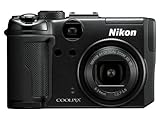
Nikon’s classically compact Coolpix P6000 combines 13.5 effective megapixels with a 4x wide-angle optical Zoom-Nikkor ED glass lens for stunning prints as large as 20×30 inches. Nikon’s EXPEED image processor and Image stabilization make for sharp pictures. The incredible, bright 2.7-inch LCD and optical viewfinder make it easy to compose and share pictures. Get the ultimate in control and creativity with Program, Shutter, Aperture and full Manual exposure modes. The Nikon Coolpix P6000 also has a Wired LAN port and GPS geo-tagging capability to upload your pictures to Nikon’s my Picturetown photo storage and sharing service.

What does this mean?
Simply put, wired LAN support offers easy access to the Internet for automatic and secure online image storage using the Picture Bank service of my Picturetown, which also provides the ability to send images directly to a blog or other websites. And a new built-in GPS (Global Positioning System) unit can record the location of shots when taken and attach ?geotags” with information about latitude and longitude to each image file. This adds the fun of being able to view the location on maps available in ViewNX or my Picturetown, or to edit or add geotag information.

Forget about videocassette & tapes: welcome SD-based waterproof camcorders, Sanyo Xacti VPC-E2 and Panasonic SDR-SW20!

Saturday, December 20th, 2008

Not only these camcorders integrate the very latest digital video technology, use commonly-available and low-cost SD cards as storage media, they’re waterproof too!
This means they will survive most extreme situations: your deep-diving session and your kid’s birthday party (you know how bad things get there)!

The Sanyo Xacti VPC-E2 Digital Camcorder and 8 MP Digital Camera records full 640×480 resolution video at 60 fields-per-second to memory card, shoots high-resolution 8-megapixel digital still images and easily share videos on the Web, as the camera incorporates AVC/H.264 video compression.

The Sanyo Xacti VPC-E2 records up to a total of 8 hours of full motion video on an 8 GB SD memory card and comes with a 2.5-inch LCD screen that can rotate up to 285-degrees.
It is very handy and perfectly fits your pocket, available right when you need it!

The Panasonic SDR-SW20 it’s incredibly small, captures video to flash memory and is waterproof to 5 feet also shockproof to 4 feet.
Has a 10x optical zoom a tiltable 2.7-inch LCD screen.
The Panasonic SDR-SW20 compatible with SD/SDHC memory cards; as an example a 16GB SDHC memory card allows up to approximately 13 hours, 20 minutes of recording.
In Quick Start mode, recording begins in just 0.6 seconds from the time the LCD is opened. This lets you catch those sudden shooting opportunities.The USB port allows you to connect directly to a DVD burner.

New Panasonic Lumix DMC-FZ28

Sunday, August 10th, 2008

Panasonic DMC-FZ28 digital camera boasts a premium 27mm wide-angle Leica lens with an 18x optical zoom, ideal for tight indoor shots and long-distance action photos.

The new camera is the successor to the popular FZ18 and comes with a slightly increased resolution (10.1 vs 8.0 MP) and all the zoom range you could ever need (27-486mm, 35mm equivalent).

The 10.1-megapixel digital camera also features an enhanced Intelligent Auto Mode (iA), with the new AF (auto focus) Tracking function, making it easier for photographers at any level to shoot sharp, well-focused photos, even when the subject is moving — making it ideal for action shots.

Panasonic Lumix DMC-L1 w/Leica Lens with up to 35% saving?

Saturday, January 5th, 2008

The Panasonic Lumix DMC-L1 is a digital SLR compatible with Olympus’ Four Thirds lens mount standard.
The L1 is an interesting SLR at that, with a traditional - perhaps retro - styling aesthetic.
It is based around the same 7.5 effective megapixel Live MOS image sensor that debuted in Olympus’ EVOLT E-330 digital SLR, along with the mirror box unit from that camera (which combines a quick-return mirror, viewfinder, and AE sensor). Panasonic’s proprietary Venus Engine III LSI handles the image processing, and Olympus’ Supersonic Wave Filter makes its first debut in a non-Olympus branded camera.

The Lumix DMC-L1 has a shutter speed dial on the top of the body, while a simultaneously announced Leica 14-50mm lens offers rings to control aperture, focus and lens zoom. As with the EVOLT E-330, the L1 offers a Live View function that allows images to be framed using the LCD display, regardless of whether you’re focusing automatically or manually. In addition, you can use the LCD display as a handy confirmation of focus via an enlarged view when focusing manually.

The L1 offers a 2.5″ LCD display with 207,000 pixels, at the high end of what’s available on digital SLRs at the current time. One other feature worthy of note is that the Panasonic DMC-L1 offers a Secure Digital card slot, and is compatible with the FAT32 file system - meaning that Secure Digital cards larger than 2GB are supported.

Amazon’s offer slashes by 35% the Lumix L1 its list price, from US$ 1.499 down to $968.96 with a gorgeus Leica 14-50mm Mega O.I.S. Lens!


All products names and icons are trademarks of their respective holders.
SourceCrowd.com is not responsible for the availability and correctness of the information provided
nor responsible for any damage that may occure to your equipment or you by using the published information.