Ok, we all love the image quality offered by DV video cameras (or even the latest model High Definition ones): but what’s better than a pocketful of simplicity? SourceCrowd.com is bringing you a small roundup of higly portable, take-everywhere gadgets that bring the FUN factor back into taking a snapshot or a quick movie and sharing it with friends and family. Forget about having to carry bulky battery packs, winding tapes or anything of the sort: just point, shoot, copy, watch & share!
These tiny videocameras, aptly called Flip Video, allow you to record a maximum of 60 minutes of digital video (on 1GB of storage, 512 MB on the 30 minute version) that can be copied straight into your PC as an AVI file. The camcorder has a 1.4 inch color screen for instant viewing, full 30 fps MPEG-4 video quality at VGA (640×480) resolution, video-out capability for viewing on your TV, built in mic and speakers, and a flip-out USB 2.0 arm for connecting straight into a computer.
Also of note, the RCA EZ105 Small Wonder, a small and sleek minicamcorder capable of recording 60 minutes of standard quality MPEG4 video or 30 minutes of high quality video. At the back of the slim enclosure is a 1.5 inch LCD display to view your footage, and the lens is capable of 2x zoom. It has the same video out capability as the Flip Video, and sports a built in tripod mount. This really is a bring-everywhere piece of kit, running on 2 standard AA batteries.
You can now record your videos anywhere and never worry about dust, sand or even kids crushing a $1000+ videocamera: these solid-state camcorders will get you through the most dangerous missions! All your birthdays, rave parties or whatever you get involved into, can be just a snap away from online viewing & sharing on youtube or e-mailing to your friends.
Apple has announced an update to its MacBook Pro line of notebooks with the latest Intel Core 2 Duo processors, memory up to 4GB thanks to the new “Santa Rosa” chipset architecture, and high-speed graphics with the NVIDIA GeForce 8600M GT. The 15-inch model sports a new mercury-free, power-efficient LED-backlit display, while the 17-inch model has an optional high-resolution 1920-by-1200 display. Rounding up the high end specs, all models include a built-in iSight video camera, MagSafe Power Adapter, and built-in 802.11n wireless networking.
Every MacBook Pro includes an Intel Core 2 Duo processor with 4MB of shared L2 cache, an 800 MHz frontside bus and 2GB 667 MHz DDR2 SDRAM memory, with 2.2 GHz and 2.4 GHz processor options for the 15-inch models, and a 2.4 GHz processor powering the 17-inch.
For full specs and availability visit the Apple website. Basic configurations and pricing are as follows:
Apple has announced the release date of its upcoming iPhone mobile device in the US in a series of ads which began airing on Sunday. The three ads have also been posted on Apple’s own website. The iPhone was first unveiled in January by company CEO Steve Jobs, and has since been one of the most talked about, and sought after, gadgets of the year. Drawing both critiques and accolades even before it has been released to the public, the only thing that everybody seems to be agreeing on is that they would like one!
Featuring a 3.5-inch multi-touch display, the device is a widescreen iPod, a quad-band GSM phone with a 2-megapixel camera, and an internet browsing powerhouse thanks to the full-size Safari browser and underlying OS X operating system. Further communication possibilities are opened by the phone’s Wi-Fi, Bluetooth and EDGE data transfer capabilities. Two models will be available on the launch date of June 29: a 4GB one priced at $499 and a 8GB version priced at $599. According to the ads sales are subject to 2 years plan subscriptions with AT&T.
Sony is rolling out firmware 1.80 for its PlayStation 3. This latest update will add resolution upscaling capability for PlayStation and PlayStation 2 titles, as well as bring DVD playback to full 1080p resolution when viewed on compatible HDTVs. Further enhancements include Remote Play functionality for the PlayStation Portable (PSP), which allows users to access their PlayStation 3 consoles remotely from its portable little brother using any available wireless connection. Moreover, Sony is boosting the PS3 as a media hub for the front room, adding the ability to network the console with home PCs to stream media content on to TV sets.
In related news, VoIP service Jajah has made an update to its website that streamlines it for use on the PS3. As voipstage.com reports, Jajah lets you register with your “home phone number, then when you want to call someone you enter their number into your browser and Jajah will dial your phone and connect you directly”, doing away with headsets as it uses your existing handset (or mobile phone). The service is free between Jajah users.
BT (British Telecom) and Sony have teamed up to offer users of the electronics giant’s PlayStation Portable (PSP) a VoIP option that will enable them to place voice and video calls to other PSP owners and some BT phones. The service, which is then set to expand to allow calls to PCs, fixed lines and mobile phones, will use a new camera and microphone PSP accessory called Go Camera, to be released in the UK on 25 May.
BT is taking care of the software side of the deal, while also offering its 2000 UK hotspots infrastructure to which the initial service will be exclusive. BT said it expects to then sell the software to telecoms in another 100 countries
SANYO has introduced the Sanyo Xacti VPC-E1 6MP Waterproof MPEG4 Camcorder with 5x Optical Zoom , a waterproof camcorder aimed at active families, vacationers and water sports enthusiasts. Encased in a colorful compact design, the E1 can record high-quality MPEG-4 video (using the H.264 standard) and doubles as a 6-megapixel stills camera under water to a depth of five feet for up to one hour at a time. The device records to a standard SD memory card or high-capacity SDHC card (up to 10 hours of 640 x 480 pixel, 30 fps video on a 8GB card). Moreover, the Xacti E1 sports a flip-out 2.5-inch LCD color display, 5x optical zoom and an anti-shake digital image stabilizer. It measures 2.8 x 4.4 x 1.6 (W x H x D, in inches) weighing in at 8.3 oz. SANYO does away with the need of a bulky underwater housing and is counting on the easy, one hand operation of the camcorder to allow users to take it everywhere all year round: the beach and the lake for snorkeling and water-skiing enthusiasts, and the snowy slopes for skiers and snowboarders. And of course it is handy for recording all the fun at parties, children’s school or sports events and family outings.
The SANYO Xacti E1 will be available in the U.S.A. in a choice of blue, yellow and white colors in mid-June 2007 at $499.99 MSRP.
Casio has today announced it will launch the flagship EXILIM Zoom EX-Z1200, the first compact point&shoot camera to sport a 12.1 effective megapixels sensor. An update to the 10.1 megapixel EXILIM Zoom EX-Z1000, the new model has a 2.8-inch wide display and is said to offer an amazing level of detail allowing users to print high resolution photos in large sizes or when trimmed to show just one part of the image. According to Casio, the 3x optical zoom, high definition video capable EX-Z1200 incorporates “CCD-shift image stabilization and the latest EXILIM Engine 2.0 image processing module with motion analysis technology. These innovative features work together to help prevent blurry shots due to shaky hands, subject movement or poor focus when photographing moving subjects such as children or pets.”: the camera combines an auto-tracking AF system with face detection and motion analysis technologies, locking the focus to a subject’s face even if it’s moving.
No pricing has yet been announced for the EXILIM Zoom EX-Z1200.
Welcome to the second part of our special report. We left off with Apple representative Richard West talking about the importance of color calibration…
Next up was Jonathan Ferman, Business Development Manager, Media & Publishing for Adobe, going through some of the new features of the main applications in CS3. He started off with Bridge, Adobe’s asset management program, which managed to first draw blanks from the audience (a show of hands revealed that although all of the attendees used CS2 or at least a few of its programs, none used Bridge for asset management) and then chuckles when Ferman showed its “completely reworked and improved UIâ€: everything from functionality to colour scheme seems to have been lifted from Apple’s Aperture (down to the 100% magnification function, a square called Zoom in Bridge, more than reminiscent of the circular Loupe in Aperture). Inside Bridge are some new collaborative features like Version Cue, offering built-in support for workgroups and check-in and check-out functionality when multiple people are working on the same file/project, and Acrobat Connect, a flash-based mini-app that allows onscreen meetings and classes with remote assets-sharing capabilities.
Photoshop sports faster startup times and a reworked UI. Palettes have now been renamed Panels, and have been made more fluid and easily customizable. Panels work in a way that is similar to browser tabs, movable and switchable around the workspace, and new tools/name/icon views allow saving screen real estate to concentrate on the image and minimize the pixels taken over by the tool switches. A very cool feature is the quick selection tool, an improvement on the lasso tool to cut out elements of an image with stunning precision. The new tool takes into account not only edges, but also colour and even texture: and if that’s still not precise enough for you, a Refine Edge tool brings you into the finest details like hair and fabrics. The ease of use of this features was quite impressive. Perhaps the most interesting feature of all was the auto align pictures: you can now select a bunch of similar pictures, and PS will align them for you based on content, layering them in an onion skin fashion, and allow users to choose the best exposure by deleting or bringing parts of the layers to the front. Stitching panoramas with auto exposure correction via auto blending is also possible, all at a click of one button. 3D and video/audio are now supported, and fully editable, inside PhotoShop. 3D layers, wireframe views, lighting effects, frame by frame editing, music scoring, all in one place and with tight integration with the other programs of the Suite.
Dreamweaver is one of the Macromedia applications Adobe is bundling in CS3, and is now fully compatible and integrated with Photoshop. It boasts even better tools to check browser compatibility issues (offering solutions through a community-driven website) and CSS stylesheet manipulation, with presets for outputting the same content for web, print, and mobile devices alike. In particular, users are able to preview how their work will look on different handeld decives through Device Central, a fully featured emulator with a list of the latest phones from the main manufacturers (which Adobe promises to update regularly). From screen size to processor simulation, no detail is left off to replicate the user experience on different devices. And developing for different platforms is just a matter of clicking a button, Dreamweaver will do it automatically for you, adapting the content to your choice of device.
Square Group Ltd in association with Adobe, Apple and a slew of other partners organized an Adobe Creative Suite CS3 seminar at BFI Southbank in London last Tuesday, May 15, 2007. The seminar featured presentations from both Adobe and Apple about the new features of the many applications that make up Adobe’s new crown jewel, CS3, alongside demonstrations of related products from the likes of Eizo, Wacom, Extensis, HP and G-Tech. SourceCrowd was in attendance and can bring you an exclusive report from the event.
Before the seminar, attendees were able to peruse stands with a few interesting products on show. Eizo wowed the crowd with its stunning professional quality displays like the ColorEdge CE240W sporting hardware colour calibration, 14-bit color processing and easy profiling. Extensis was showcasing two of its software products for asset management: Suitcase Fusion, a font manager to organize, categorize and activate/deactivate fonts on the fly, and Portfolio, a complete multimedia files management tool. HP was showcasing the HP B9180 Photosmart Pro Printer, an eight-tanks pigment ink powerhouse which demonstrated stunning results on some of HP’s custom papers (especially impressive were the results on canvas-textured paper). Wacom had both the A4 Intuos3 graphic tablet and the Cintiq 21UX display available for hands-on demonstrations, making precise editing of pictures a breeze. Last but not least, G-Tech had the whole range of its external high speed hard drives solution on display. The elegant silver enclosures sport the latest in eSata and Firewire connections on the G-Raid2, G-Drive 250GB External FW400/USB2, G-Mini and G-Safe, with high-end fibre-channel RAID solutions also available in the G-Speed models.
Then it was finally time to immerse into the presentation!
The first speaker was Richard West, Apple Business Development Manager for the UK and Ireland. He started by stressing how important it is, in a multimedia communicational landscape, to put to good use the plethora of different ways that businesses have to reach clients, by customizing communications to target and focus on different markets. Adobe Creative Suite CS3, he argued, is the tool of choice to do so, allowing the use of a single creative process for multiple disciplines through its multiplicity of applications. Since output is so important to the designers and developers who use CS3, he then went on to demonstrate how colour calibration devices (in this case, the Pantone Huey Pro MEU113) can work in tandem with OS X ColorSync Utility (found in the Applications>Utilities folder) to prevent disparity between screen output versus print/web output. In particular he showed how it is possible to compare colour spaces graphically, and onscreen proofing of different colour spaces just by dragging and dropping images on the application. Microsoft’s Windows has “borrowed†the same functionality for its latest OS, implemented in Vista under the name Windows Colour System (located in the Control Panel).
Stay tuned for the second part of our report - coming soon!
Following this month’s beta testing release (see SourceCrowd’s report here), Microsoft has announced the highly anticipated XBox 360 game Halo 3 will be released on September 25, 2007 in the US (one day later in Europe). Hoping to drive games and consoles sales in the run-up to Christmas, Microsoft will launch the third chapter of the first-person shooter game in 3 versions: the basic game will cost $59.99, a limited edition retailing for $69.99 and a legendary edition for $129.99. Microsoft is set to mount a huge publicity campaign to boost the new game contender, hoping it will help in the console wars against Sony’s PS3 and Nintendo’s Wii.
LG.Philips LCD announced it has developed the world’s first 14.1″ flexible color E-paper display, equivalent in size to an A4 sheet of paper and less than 300 micrometers(㎛) thick. The images displayed are said to be comparable in quality to printed pages. This new device is a further enhancement after the company’s black and white flexible E-paper display announced in May 2006. According to the LG.Philips website, the E-paper uses electronic ink from E-Ink Corp. to produce a maximum of 4,096 colors. It has a viewing angle of 180 degrees, allowing images to be viewed even when the display is bent.
This new colour version uses a substrate that arranges Thin-Film Transistors (TFT) on metal foil rather than glass, allowing it to recover its original shape after being bent.
Apple has today cut the UK prices for the iPod Shuffle mp3 players by 10%, lowering the entry-level diminutive gadget’s price point from GBP55 to GBP49. This move follows a similar trend set in April, when Apple had reduced the prices of its high-end video iPod range (SourceCrowd announcement here).
The iPod Shuffle is available in 5 colours with 1GB capacity and up to 12 hours of playback time, measuring only 1.62 × 1.07 × 0.41 inches.
Apple has updated its consumer line of MacBook laptops adding faster processors (Intel’s Core 2 Duo), bumping up the RAM to 1GB and offering larger hard drives. The popular 13.3″ laptops still come in the familiar three configurations, with two white models and a high end black one, built-in iSight, 802.11n wireless networking and OS X Tiger and iLife suite preloaded. The lineup with the new processors is as follows:
2.0GHz Intel Core 2 Duo processor, 13.3″ White MacBook, 80GB hard drive, 1GB RAM, Intel Graphics 950, RRP $1099
2.16GHz Intel Core 2 Duo processor, 13.3″ White MacBook, 120GB hard drive, 1GB RAM. Intel Graphics 950, RRP$1299
2.16GHz Intel Core 2 Duo processor, 13.3″ Black MacBook, 160GB hard drive, 1GB RAM, Intel Graphics 950, RRP $1499
The new MacBooks are available for purchase now from the Apple Store
and other selected retailers.
The Haier Elegance is a “lipstick case-sized” luxury GSM mobile phone which boasts the “smallest GSM phone with integrated mp3 player” tag. It measures a mere 9.1 x 3.5 x 1.8cm (3.5 inches long), sporting a black pearl reflective finish, built-in mp3 player with up to 1.128GB of space (through optional microSD card adding to the 128MB of space included), FM Stereo tuner, Voice Recorder, Photo viewer, stereo BlueTooth transmitter and full color OLED display. The diminutive phone promises 3 hours of talktime and 11 hours of music playback, not bad for a gadget people will buy for its looks and sleek design more than its practicality.
It is available in US dual band technology or European tri-band to conform to the different GSM standards and is ready for purchase worldwide through Haier’s online shop.
AMD has today launched its ATI Radeon HD 2000 series of graphic card. They feature, according to the company’s website, a series of “firsts” in the graphics market: second-generation Unified Shader Architecture (USA), a 512-bit memory bus designed for full performance high dynamic range (HDR) rendering, and new Unified Video Decoder (UVD) technology for high-fidelity HD media playback. The HD 2000 series also takes full advantage of DirectX 10 and Windows Vista’s features, as well as the latest OpenGL programs. The new chips have built-in Crossfire capability, allowing users to pair up 2 cards in PCI Express slots without the need of any additional hardware or cables. AMD’s guide design can include HDMI-out with audio, thus completing the process of transforming PCs into real media hubs in the modern home.
This HD revolution involves notebooks as well as desktops: the Mobility Radeon HD series features the same architecture in a package that uses smaller 65 nm process technology in order to achieve passive cooling and promises lower power consumption. At the same time, these powerful chips should relieve the main CPU from the more taxing graphic tasks, allowing next-gen HD content to be enjoyed on even the smaller, thin portable computers.
The Radeon HD 2000 series for desktops will be available in the next few days, with the first Mobility models set to launch in new laptops by the end of the month.
All products names and icons are trademarks of their respective holders. SourceCrowd.com is not responsible for the availability and correctness of the information provided nor responsible for any damage that may occure to your equipment or you by using the published information.


 line of notebooks with the latest Intel Core 2 Duo processors, memory up to 4GB thanks to the new “Santa Rosa” chipset architecture, and high-speed graphics with the NVIDIA GeForce 8600M GT. The 15-inch model sports a new mercury-free, power-efficient LED-backlit display, while the 17-inch model has an optional high-resolution 1920-by-1200 display. Rounding up the high end specs, all models include a built-in iSight video camera, MagSafe Power Adapter, and built-in 802.11n wireless networking.
 Every
Every 


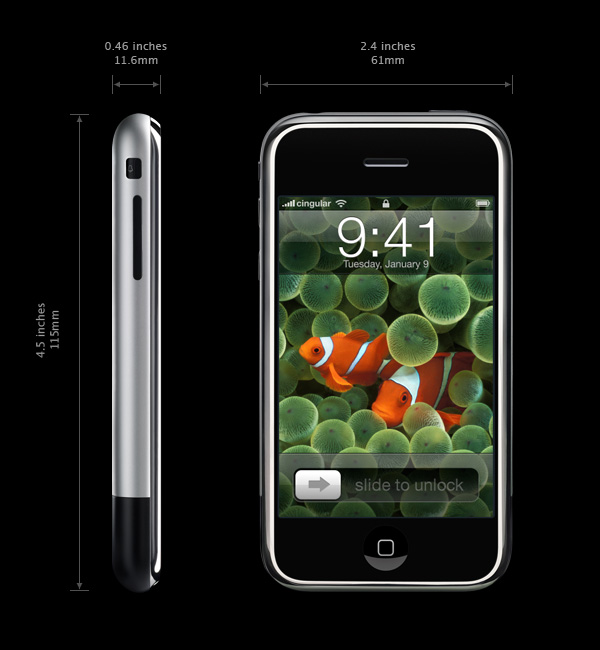 Apple has announced the release date of its upcoming iPhone mobile device in the US in a series of ads which began airing on Sunday. The
  Sony is rolling out
  . This latest update will add resolution upscaling capability for PlayStation and PlayStation 2 titles, as well as bring DVD playback to full 1080p resolution when viewed on compatible HDTVs. Further enhancements include Remote Play functionality for the
  , which allows users to access their PlayStation 3 consoles remotely from its portable little brother using any available wireless connection. Moreover, Sony is boosting the


 Casio has today announced it will launch the flagship EXILIM Zoom EX-Z1200, the first compact point&shoot camera to sport a 12.1 effective megapixels sensor. An update to the 10.1 megapixel
  , the new model has a 2.8-inch wide display and is said to offer an amazing level of detail allowing users to print high resolution photos in large sizes or when trimmed to show just one part of the image. According to Casio, the 3x optical zoom, high definition video capable EX-Z1200

 Square Group Ltd
 seminar at
  sporting hardware colour calibration, 14-bit color processing and easy profiling. Extensis was showcasing two of its software products for asset management:
  , a font manager to organize, categorize and activate/deactivate fonts on the fly, and
  , a complete multimedia files management tool. HP was showcasing the
  , an eight-tanks pigment ink powerhouse which demonstrated stunning results on some of HP’s custom papers (especially impressive were the results on canvas-textured paper). Wacom had both the
  graphic tablet and the
  ,
, 
 ) can work in tandem with OS X ColorSync Utility (found in the Applications>Utilities folder) to prevent disparity between screen output versus print/web output. In particular he showed how it is possible to compare colour spaces graphically, and onscreen proofing of different colour spaces just by dragging and dropping images on the application. Microsoft’s Windows has “borrowed†the same functionality for its latest OS, implemented in Vista under the name Windows Colour System (located in the Control Panel).
 Following this month’s beta testing release (see SourceCrowd’s report


